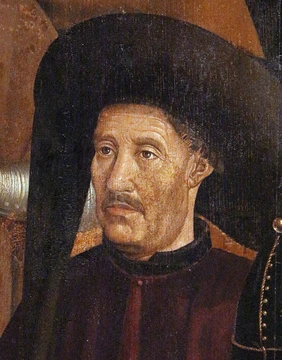
Adam Johann von Krusenstern
Russian admiral who led the first Russian circumnavigation of the globe.

Wikipedia / Wikimedia Commons
Adam Johann von Krusenstern (Russian: Ivan Fyodorovich Kruzenshtern; 10 October 1770 – 12 August 1846) was a Russian admiral and explorer of Swedish and Baltic German descent. He led the first Russian circumnavigation of the Earth in 1803–1806, a voyage that aimed to develop the fur trade with Russian America and establish commercial links with Spanish California, Manila, and Guangzhou.
- born
- 10 October 1770, Haggud, Harrien County, Reval Governorate, Russian Empire (now Hagudi, Estonia)
- died
- 12 August 1846, Kiltsi manor, Estonia
- field
- Exploration, naval science
- nationality
- Russian (of Swedish and Baltic German descent)
- known_for
- First Russian circumnavigation of the Earth (1803–1806)
Lore & Background
Krusenstern was born into a Baltic German noble family in what is now Estonia. His patrilineal ancestors descended from the Swedish noble family von Krusenstierna and remained in Estonia after Sweden ceded the territory to Russia in 1721. He joined the Russian Imperial Navy in 1787, served in the war against Sweden, and later served in the British Royal Navy from 1793 to 1799, visiting America, India, and China.
After publishing a paper advocating direct sea communication between Russia and China via Cape Horn and the Cape of Good Hope, he was appointed by Tsar Alexander I to lead a voyage to the Far East. With the patronage of Alexander, Count Nikolay Petrovich Rumyantsev, and the Russian-American Company, Krusenstern commanded the ship Nadezhda (along with Otto von Kotzebue commanding the Rurik) on the first Russian circumnavigation. The ships traveled from the Baltic through the North Sea and Atlantic to the Pacific.
Upon return, Krusenstern wrote a detailed report published in Saint Petersburg in 1810, later translated into English, French, Dutch, Danish, Swedish, and Italian. His scientific work, including an atlas of the Pacific, was published in 1827. He became an admiral in 1841, received the Pour le Mérite (civil class) in 1842, and died in 1846 at Kiltsi manor, being buried in Tallinn Cathedral.
Reader's Guide
Krusenstern's significance lies in his leadership of the first Russian circumnavigation, which advanced geographical science and aimed to integrate Russia's Pacific territories into a global trade network. His voyage connected the Baltic to the Pacific via the Atlantic, fostering fur trade with Russian America and opening routes to Spanish California, Manila, and Guangzhou. His detailed report and Pacific atlas became foundational works, earning him honorary membership in the Russian Academy of Sciences, election to the Royal Swedish Academy of Sciences (1816), and the American Philosophical Society (1824). As director of the Russian naval school and a member of the marine department's scientific committee, he contributed to naval technology, notably a device to counteract iron's influence on compasses. His legacy endures through numerous place names—Mount Kruzenshtern, Krusenstern Island, Cape Krusenstern (site of a national monument), and a lunar crater—as well as ships named after him, including the training tall ship Kruzenshtern. He also renamed the Cook Islands in 1835 to honor Captain Cook, a change formalized by New Zealand law in 1901.
Did You Know?
- Krusenstern served in the British Royal Navy from 1793 to 1799, visiting America, India, and China.
- He renamed the Hervey Islands to the Cook Islands in 1835 to honor Captain Cook.
- A fictional steamship named Admiral Ivan Fyodorovich Kruzenshtern appears in the popular Russian animated film series Prostokvashino.
- His son Paul Theodor explored the Arctic Ocean and Kara Sea, notably being shipwrecked in 1862.
Frequently Asked Questions
Who is Adam Johann von Krusenstern?
He was a Russian admiral of Swedish and Baltic German heritage who commanded the first successful Russian circumnavigation of the globe from 1803 to 1806. Born in 1770 in what is now Estonia, he went on to become one of the most prominent naval explorers of the early 19th century.
What was the main purpose of Krusenstern's circumnavigation?
The expedition was designed to open the fur trade with Russian America and forge commercial links with Spanish California, Manila, and Guangzhou. It served as much as an economic venture as a scientific and navigational undertaking.
Why is Adam Johann von Krusenstern important in exploration history?
He led the first time Russia completed a full circumnavigation of the Earth, a milestone for Russian naval science and global trade ambitions. The voyage also yielded valuable geographic and ethnographic data that broadened European knowledge of the Pacific region.
Where was Krusenstern born and where did he die?
He was born on 10 October 1770 in Haggud, in the Reval Governorate (present-day Hagudi, Estonia), and died on 12 August 1846 at Kiltsi manor, also in Estonia. His life was thus anchored in the Baltic region of the Russian Empire.
What field is Krusenstern associated with?
His work spanned exploration and naval science, placing him squarely in the age of maritime discovery. He is best remembered for proving that Russian vessels could rival those of Britain and France in global sailing through his 1803–1806 voyage.
More in Explorers & Navigators 1-24
Elsewhere in the Explorers & Navigators universe
Spotted an error? Know more?
This is a living reference — every entry is fact-audited, and reader corrections feed straight into our audit queue. Suggest an edit · See this site's audit record