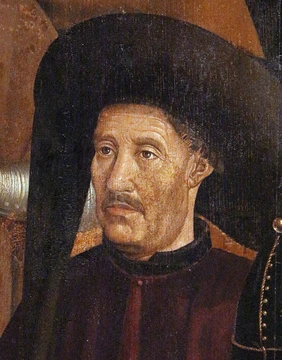
Andrés de Urdaneta
Explorer who charted the Manila galleon route and became an Augustinian friar.
Andrés de Urdaneta (1508 – June 3, 1568) was a Spanish maritime explorer and later an Augustinian friar. He is best known for discovering and plotting an easterly route across the Pacific Ocean from the Philippines to Acapulco in the Viceroyalty of New Spain, a route that became the Manila galleon trade route for over two hundred years. He also played a key role in establishing the Catholic faith in the Philippines and was considered a 'protector of the Indians.'
- born
- 1508, near Ordizia (then Villafranca), Crown of Castile
- died
- June 3, 1568
- field
- Maritime exploration, navigation, missionary work
- nationality
- Spanish
- known_for
- Discovering the easterly Pacific route from the Philippines to Acapulco; Manila galleon trade route
Lore & Background
Andrés de Urdaneta was born in 1508 near Ordizia, a Basque town then known as Villafranca, in the Crown of Castile. His father, Juan Ochoa de Urdaneta, served as mayor of Villafranca, and his mother, Gracia de Cerain, came from a family of good standing. At age 17, he joined the Loaísa expedition to the Spice Islands as a page to Juan Sebastián Elcano. The seven-ship fleet left A Coruña on July 24, 1525. The voyage was disastrous: two ships deserted, four were lost to storms, and both Loaísa and Elcano died. Only one ship, the Santa Maria de la Victoria, reached the Spice Islands in October 1526 with 105 of the original 450 crew. Urdaneta spent over eight years there, acting as an emissary, leading reconnaissance missions, and fighting the Portuguese. During one fight, a keg of gunpowder exploded, severely burning and permanently disfiguring him. After learning of the Treaty of Zaragoza (1529), which recognized Portuguese control, he eventually left the Spice Islands on February 15, 1535, traveling via Java, Malacca, and Cochin to Lisbon, where his maps and journals were confiscated. He fled to Spain and reported to the Council of the Indies in Valladolid, receiving only 60 gold ducats for his eleven years of service.
Reader's Guide
Urdaneta's significance lies in his discovery of the easterly Pacific route from the Philippines to Acapulco in 1565, which made it practical for Spain to colonize the Philippines and established the Manila galleon trade route for over two hundred years. Although the route was first discovered by Alfonso de Arellano, who deserted the Legazpi expedition ahead of Urdaneta, Urdaneta's plotting and navigation of the route were crucial. His earlier experiences in the Spice Islands, detailed in his journals and charts, provided invaluable geographic and navigational knowledge. After settling in New Spain around 1540, he became an Augustinian friar in 1552 and was ordained a priest in 1557. At the request of Philip II, he joined the Legazpi expedition as an advisor and led a group of Augustine missionaries, playing an important role in establishing the Catholic faith in the Philippines. He was also considered a 'protector of the Indians' for his treatment of Philippine natives. His legacy endures as a key figure in Spanish exploration and the trans-Pacific trade that connected Asia and the Americas.
Did You Know?
- Urdaneta was permanently disfigured when a keg of gunpowder exploded during a fight with the Portuguese in the Spice Islands.
- He left behind an illegitimate daughter, conceived with an Indian woman in the Spice Islands.
- His maps and journals were confiscated by Portuguese authorities when he reached Lisbon in 1536.
- He was appointed corregidor of a district in Michoacán in 1543 and later served as visitador, investigating official corruption and mistreatment of natives.
Frequently Asked Questions
Who is Andrés de Urdaneta?
He was a 16th-century Spanish sailor and navigator who later took holy orders as an Augustinian friar. He is best remembered for finding the return leg of the Pacific crossing that linked the Philippines to Mexico.
What was Urdaneta's major navigational achievement?
In 1565 he plotted an easterly course across the Pacific from the Philippines to Acapulco, solving the long-standing problem of how to sail back against the prevailing westerlies. That passage became the backbone of the Manila galleon trade for roughly two centuries.
What did Urdaneta do after his sea voyages?
He entered the Augustinian order and devoted the remainder of his life to missionary work in the Philippines. He was widely regarded by his contemporaries as a protector of the indigenous Filipino population.
Why is Urdaneta considered important in navigation history?
Before his 1565 crossing, no European had successfully completed the easterly Pacific leg, which made the Manila-to-Acapulco connection effectively one-way. His solution turned the Pacific into a two-way commercial highway and underpinned Spain's Asian trade for over two hundred years.
Where was Urdaneta born and when did he die?
He was born around 1508 near Ordizia in the Crown of Castile, in what is now Spain, and he passed away on June 3, 1568.
More in Explorers & Navigators 1-24
Spotted an error? Know more?
This is a living reference — every entry is fact-audited, and reader corrections feed straight into our audit queue. Suggest an edit · See this site's audit record