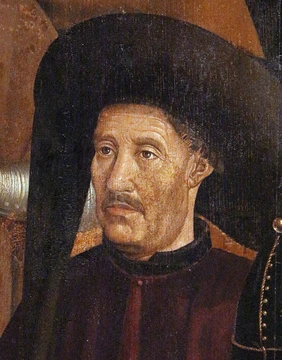
Alexander Mackenzie (explorer)
Scottish explorer who first crossed North America north of Mexico.

Wikipedia / Wikimedia Commons
Sir Alexander Mackenzie (c. 1764 – 12 March 1820) was a Scottish fur trader and explorer. In 1793, he became the first European to cross North America north of Mexico. A key figure in the North West Company, he aimed to push the company’s reach into western Canada and sell the furs gathered there in China. That ambition put him in competition with the monopolies held by the Hudson’s Bay Company and the East India Company. The Mackenzie River and Mount Sir Alexander bear his name.
- born
- c. 1764, Stornoway, Lewis, Scotland
- died
- 12 March 1820, Avoch, Black Isle, Scotland
- field
- Exploration, fur trade
- nationality
- Scottish
- known_for
- First recorded transcontinental crossing of North America north of Mexico (1793)
Lore & Background
Mackenzie was born in Stornoway, Lewis, the third of four children. At age 14, he sailed to New York City with his father in 1774. During the American War of Independence, his father and uncle served as lieutenants in the King's Royal Regiment of New York. For his safety as a son of loyalists, Mackenzie was sent to Montreal by 1778. By 1779, he had secured an apprenticeship with Finlay, Gregory & Co., a prominent fur trading company that merged with the North West Company in 1787.
On behalf of the North West Company, Mackenzie journeyed to Lake Athabasca and helped found Fort Chipewyan in 1788. In 1789, he set out by canoe on the river known to the Dene as the Dehcho (later named the Mackenzie River), reaching the Arctic Ocean on 14 July. In 1791 he returned to Britain to study longitude measurement. In 1792 he set out again, and on 20 July 1793 reached the Pacific coast at Bella Coola, British Columbia, completing the first recorded transcontinental crossing north of Mexico. He left a message painted on a rock near Dean Channel.
Reader's Guide
Mackenzie's significance lies in his 1793 crossing, which preceded the Lewis and Clark expedition by 12 years and demonstrated a viable transcontinental route through Canada. His explorations helped extend the Canadian fur trade westward and informed later efforts by Simon Fraser and David Thompson. The Mackenzie River, Mount Sir Alexander, Mackenzie Bay, and the municipality of Mackenzie, British Columbia, are named for him. His journals were published in 1801, and he was knighted in 1802. He served in the Legislature of Lower Canada from 1804 to 1808. His legacy includes schools named after him across Canada, a rose cultivar, and references in folk song and literature. The site of his 1793 inscription is now Sir Alexander Mackenzie Provincial Park and a National Historic Site. In 2016, he was named a National Historic Person.
Did You Know?
- Mackenzie's 1789 expedition reached the Arctic Ocean, not the Pacific, leading him to call the river 'the River Disappointment' in a letter to his cousin.
- He unknowingly missed meeting George Vancouver at Bella Coola by 48 days in 1793.
- Mackenzie married 14-year-old Geddes Mackenzie in 1812; they had two sons and a daughter.
- His journal contains the first written record of the Carrier language, an Athabaskan language.
Frequently Asked Questions
Who is Alexander Mackenzie (explorer)?
Sir Alexander Mackenzie was a Scottish fur trader and explorer born around 1764 in Stornoway on the Isle of Lewis. He is best remembered as the first European to traverse the entire continent of North America north of Mexico, a feat he completed in 1793.
What did Alexander Mackenzie accomplish in 1793?
Mackenzie led an expedition that carried him from the eastern seaboard of North America all the way to the Pacific, making him the first recorded European to cross the continent north of Mexico. That single journey secured his lasting place in exploration history.
What role did Alexander Mackenzie play in the fur trade?
He was a driving force behind the North West Company, pushing its trading network deep into western Canada to collect furs for sale in China. That ambition placed him in direct rivalry with the Hudson's Bay Company and the East India Company, both of which held competing monopolies.
What places are named after Alexander Mackenzie?
The Mackenzie River in Canada and Mount Sir Alexander both bear his name in recognition of his exploratory work. These geographic features remain the most visible legacy of his 1793 transcontinental crossing.
Where and when did Alexander Mackenzie die?
Mackenzie died on 12 March 1820 in Avoch on the Black Isle in Scotland, having returned to his homeland after decades of work in the Canadian fur trade.
More in Explorers & Navigators 1-24
Elsewhere in the Explorers & Navigators universe
Spotted an error? Know more?
This is a living reference — every entry is fact-audited, and reader corrections feed straight into our audit queue. Suggest an edit · See this site's audit record