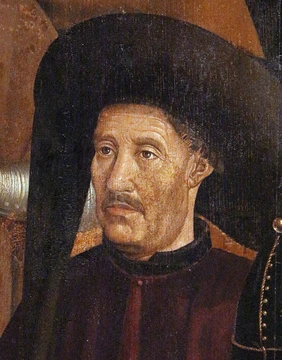
Adolf Erik Nordenskiöld
Finland-Swedish explorer who first navigated the Northeast Passage.

Wikipedia / Wikimedia Commons
Nils Adolf Erik Nordenskiöld, a Finland-Swedish baron, was a geologist, mineralogist, and Arctic explorer. He came from the noble Nordenskiöld family of scientists. Born in the Grand Duchy of Finland, then part of the Russian Empire, his political activities forced him to move to Sweden in 1857. There, he served in the Swedish Parliament and the Swedish Academy. His greatest achievement was leading the Vega Expedition (1878–1879), which made the first complete voyage through the Northeast Passage along Eurasia’s northern coast. Though the expedition started with difficulties, its success is regarded as a high point in Swedish scientific history.
The Nordenskiöld family was an old Fenno-Swedish noble line. His father, Nils Gustaf Nordenskiöld, was a Finnish mineralogist, civil servant, traveler, and member of the Russian Academy of Sciences. Adolf Erik was the father of Gustaf Nordenskiöld, who explored Mesa Verde, and Erland Nordenskiöld, an ethnographer of South America. He was also the maternal uncle of polar explorer Nils Otto Gustaf Nordenskjöld, whose parents were cousins: Otto Gustaf Nordenskjöld (born 1831 in Hässleby, Sweden) and Anna Elisabet Sofia Nordenskiöld (born 1841 in Finland), Adolf Erik’s sister. The Swedish branch of the family spelled the name “Nordenskjöld,” while the Finnish branch used “Nordenskiöld.” His nephew Erik Nordenskiöld became a zoologist and historian of biology.
Nordenskiöld was born in 1832 in Helsinki, Finland, but spent his early childhood at the family estate, Frugård Manor, in Mäntsälä’s Numminen village. He attended school in Porvoo, a small town on Finland’s south coast. In 1849, he entered the Imperial Alexander University in Helsinki, studying mathematics, geology, and especially chemistry and mineralogy. He earned his master’s degree in 1853 and two years later published his doctoral dissertation, “On the crystal forms of graphite and chondrodite.” After graduating in 1853, he accompanied his father to the Ural Mountains to study iron and copper mines at Tagilsk. Upon returning, he received minor positions at the university and the mining office.
Having studied under Johan Ludvig Runeberg, Nordenskiöld belonged to Liberal, anti-tsarist circles that wanted Sweden to liberate Finland from Russia during the Crimean War. An unguarded speech at a social event in 1855 alerted Russian authorities to his political view
- born
- 18 November 1832, Helsinki, Grand Duchy of Finland, Russian Empire
- died
- 12 August 1901, Dalbyö, Södermanland, Sweden
- field
- Geology, mineralogy, Arctic exploration, history of cartography
- nationality
- Finland-Swedish
- known_for
- First complete crossing of the Northeast Passage (Vega Expedition)
Lore & Background
Nordenskiöld was born in 1832 in Helsinki and grew up on the family estate, Frugård Manor, in Mäntsälä. He studied at the Imperial Alexander University in Helsinki, earning a master's degree in 1853 and a doctorate on the crystal forms of graphite and chondrodite. His political activity in Liberal, anti-tsarist circles led to dismissal from the university and forced exile to Sweden in 1857. In Sweden, he became a member of Parliament and the Swedish Academy, and he settled in Stockholm, where he was appointed curator and director of the Mineralogical Department of the Swedish Museum of Natural History.
Nordenskiöld participated in several Arctic expeditions, including three geological expeditions to Spitsbergen and longer explorations in 1867, 1870, 1872, and 1875. In 1878, he led the Vega Expedition from Karlskrona, doubling Cape Chelyuskin in August and becoming icebound near the Bering Strait until the following summer, completing the first navigation of the northern coasts of Europe and Asia. He later explored the east coast of Greenland in 1883, successfully taking his ship through the great ice barrier. He also became a noted historian of early cartography, publishing the Facsimile-Atlas to the Early History of Cartography (1889) and Periplus (1897).
Reader's Guide
Nordenskiöld's significance lies primarily in his leadership of the Vega Expedition, which achieved the first complete crossing of the Northeast Passage, a goal sought for centuries. This expedition, though initially troubled, is regarded as a landmark in Arctic exploration and Swedish science. His earlier Arctic work included setting a northern latitude record in 1868 and conducting geological and cartographic surveys. Beyond exploration, Nordenskiöld contributed to mineralogy and the history of cartography, leaving a large collection of early maps to the University of Helsinki, later inscribed on UNESCO's Memory of the World Register. His legacy also extends through his family: his sons Gustaf and Erland became notable explorers, and his nephew Nils Otto Gustaf Nordenskjöld was a polar explorer. Nordenskiöld's political exile from Finland to Sweden shaped his career, and he was honored with a barony and the Order of the North Star upon his return from the Vega voyage.
Did You Know?
- Nordenskiöld was forced to leave Finland in 1857 as a political refugee due to his anti-tsarist activities.
- He married Anna Maria Mannerheim, aunt of Marshal C. G. E. Mannerheim.
- His 1868 expedition on the steamer Sofia reached 82° 42' N, surpassing the previous record by 12'.
- He left his personal collection of early maps to the University of Helsinki, inscribed on UNESCO's Memory of the World Register in 1997.
Frequently Asked Questions
Who is Adolf Erik Nordenskiöld?
A Finland-Swedish baron, geologist, and Arctic explorer born in Helsinki in 1832, he is best remembered for commanding the landmark Vega Expedition through the Arctic.
What is Nordenskiöld's role in the story?
He acts as the expedition leader and scientific mind behind the Vega, steering the vessel and its crew through the uncharted waters of the Northeast Passage along Eurasia's northern shore.
How does Nordenskiöld's story end?
He died on 12 August 1901 at Dalbyö in Södermanland, Sweden, after a career that spanned geology, politics, and polar exploration.
Why is Nordenskiöld important to explorers and navigators?
His 1878–1879 voyage completed the first full transit of the Northeast Passage, demonstrating that a continuous sea route along the top of Eurasia was indeed passable by ship.
What was Nordenskiöld's background before his famous voyage?
A member of the well-known Nordenskiöld family of Finnish-Swedish scientists, he trained as a geologist and mineralogist and was forced to leave Finland for Sweden in 1857 due to his political activities.
More in Explorers & Navigators 1-24
Spotted an error? Know more?
This is a living reference — every entry is fact-audited, and reader corrections feed straight into our audit queue. Suggest an edit · See this site's audit record